Greece and Rome — preparation, procession, burial, festivals, and sources
Greece
The funerary process
Immediately after death
eyes and mouth closed by a family member
body washed, perfumed, and wrapped in a long white shroud
a coin (obol) placed on the mouth — payment for Charon, the ferryman of the dead
death caused ritual pollution (miasma) — a bowl of water placed outside the house for visitors to purify themselves on leaving
Prothesisthe laying out — days 1–2
body laid out in the home for two days, so friends and family could pay their respects
women led the mourning — they performed the lament: cut their hair, dressed in black, wailed, beat their chests and flailed their arms
leading the mourning was one of the few formal public roles open to women in ancient Athens
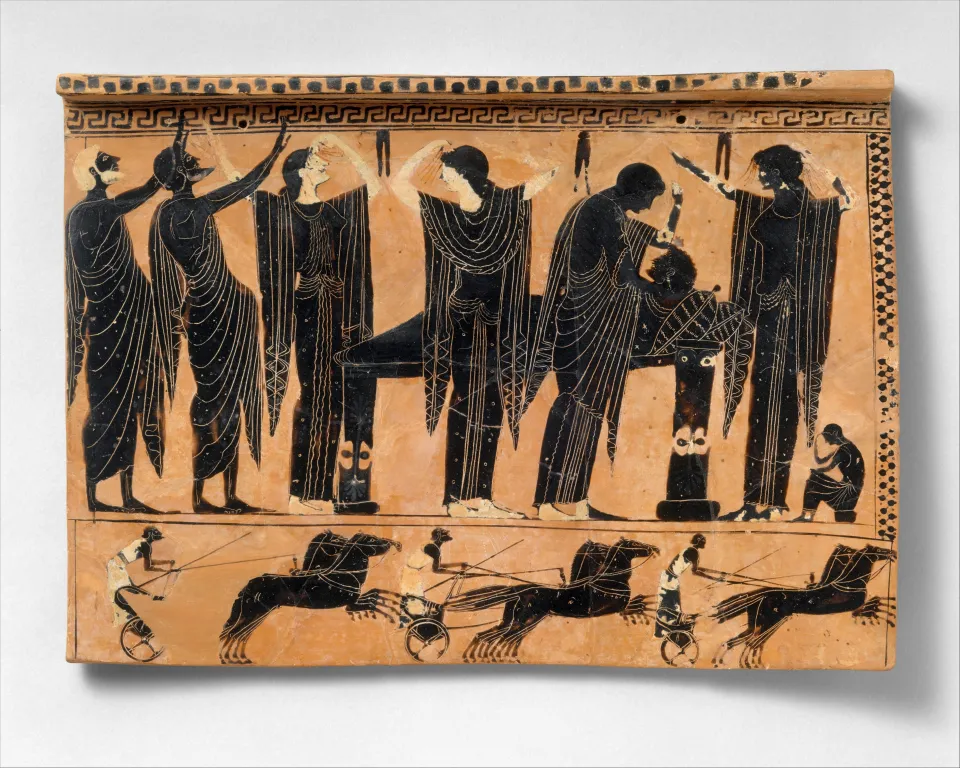
prothesis scenes appear on Athenian geometric amphorae (c.750–700 BC) — useful visual evidence
view example
Prothesis scene · Athenian geometric amphora · c.750–700 BC
Ekphorathe funeral procession — day 3, before dawn
held before dawn on day three — to limit the spread of miasma through the streets
body carried from the home to the burial ground on a wagon or by pallbearers
accompanied by an aulos (double-flute) player; women, children, and men all took part
all burials outside the city walls — to prevent pollution entering the city and its sacred spaces
in Athens, the main burial ground was the Kerameikos, just outside the northwest walls
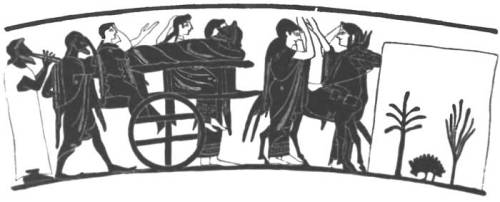
ekphora — the funeral procession
view image
Burial or cremation
both were acceptable — a sacrifice took place at the grave; blood released into the earth as an offering to Hades and Persephone
grave goods buried with the body — food, lekythoi (oil flasks painted specifically for funerary use), jewellery, personal items
wealthier families commissioned a stele — a carved stone relief showing the deceased as they were in life
a thirty-day period of mourning followed; family visited the grave on days 3, 9, and 13, then annually
what it tells us: the family's duty to the dead did not end at burial — it became an ongoing obligation maintained for generations
The whole process is built around two ideas: respect for the dead and protection of the living. The coin for Charon, the ritual water bowl, the dawn ekphora — all manage the boundary between the living and the dead. Without proper burial, a soul could not cross the Styx. That gave the process a weight far beyond social custom.
Exam focus
Describe what happened to a Greek from death to burial.
What was the prothesis, and who was primarily responsible for it?
Why did the ekphora take place before dawn?
Why was it important that the dead were properly buried?
Greece
Festivals of the dead
Genesialate September · one day · from genos = family/lineage
a festival of all ancestors — not just the recently deceased, but the whole family line going back generations
Athenian families travelled to the burial grounds outside the city
graves decorated with woollen ribbons tied around the stele
offerings of food and a blood sacrifice made at the grave in honour of all dead ancestors
reinforced the bond between the living family and their dead lineage
showed that honouring the dead was an ongoing civic and family duty — not just a one-off event at burial
Anthesterialate January · three days · linked to Dionysus
Day one: the dead were believed to rise from the underworld and roam the earth; wine from the previous year was opened; libations poured to Dionysus
Day two: drinking contests held; families poured libations at the graves of their ancestors
Day three: offerings made to Hermes — the psychopomp (guide of souls), one of only two gods able to travel between the worlds of living and dead; the living were not permitted to eat any of the food offered; the day ended as the dead returned to the underworld
Dionysus also had access to the underworld — all other Olympians were barred
The Genesia is the spec's key festival — a festival of the whole family lineage, not just the recently dead. Together the two festivals show that the Greek duty to the dead was permanent and ongoing: the Anthesteria managed the boundary when the dead briefly returned, the Genesia renewed the family's bond with all their ancestors. The fact that the living could not eat the offerings on day three of the Anthesteria shows how carefully that boundary had to be maintained.
Exam focus
Describe what happened at the Genesia.
What happened on the three days of the Anthesteria?
Why were festivals to the dead important to the Greeks?
Greece
Remembering the dead — stelai as sources
What is a stele?
a carved stone slab erected over the grave, typically showing the deceased in a scene from everyday life
made from Pentelic marble in Athens; carved in relief
showed the deceased as they were in life — not in death; a celebration of the person rather than a record of their dying
used by wealthier families; the quality and scale of the stele reflected the family's status
neglecting or destroying a grave stele was a serious dishonour to the family
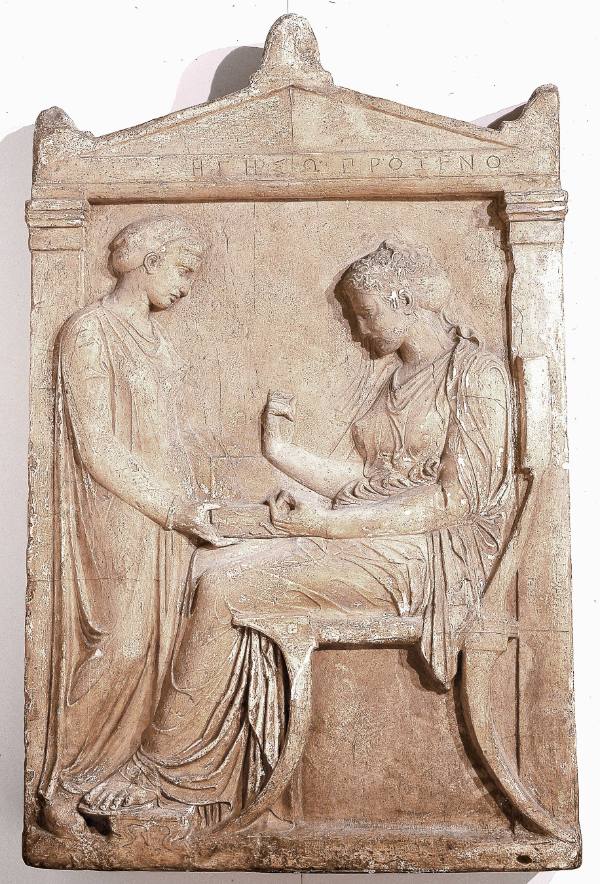
Stele of Hegesoc.410–400 BC · Kerameikos, Athens · National Archaeological Museumview stele
Stele of Hegeso · c.410–400 BC · Kerameikos, Athens
shows Hegeso seated, examining jewellery from a box offered by a standing slave girl
a domestic, peaceful scene — she is shown in the private world of a wealthy Athenian woman
the slave girl's presence shows Hegeso's wealth and status
the inscription names her as daughter of Proxenos — her identity is defined by her father, not her husband
what it tells us: Greek women of the upper classes were commemorated through domestic scenes; the stele honours her femininity, not any public role
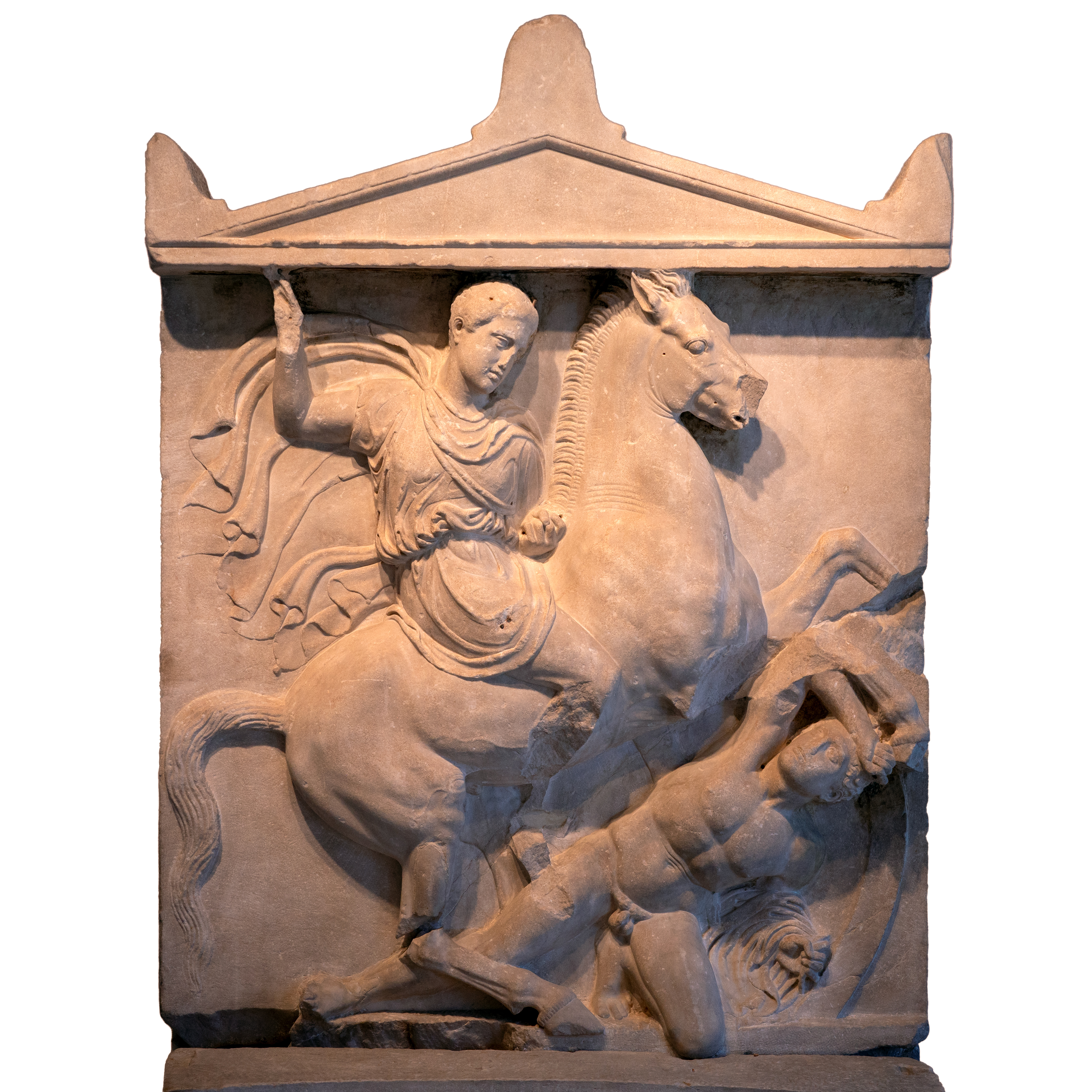
Stele of Dexileosc.394–390 BC · Kerameikos, Athens · Kerameikos Museumview stele
Stele of Dexileos · c.394–390 BC · Kerameikos, Athens
shows Dexileos on horseback, raising a spear to strike a fallen enemy — 1.86m tall
a combat scene — unusual on stelai for this period; most showed domestic scenes
Dexileos was a young Athenian cavalryman who died in 394 BC fighting Sparta in the Corinthian War, aged 20
the inscription gives his exact dates of birth and death — possibly to prove he died before the rule of the Thirty Tyrants, distancing the family from that regime
what it tells us: military service and heroic death were values worth commemorating publicly; the family chose to associate themselves with democratic Athens, not the Tyrants
view stele
Stele of Dexileos · c.394–390 BC · Kerameikos, Athens
Comparing the two stelai
Similarity: both show the deceased as they were in life; both reflect family wealth and status; both found in the Kerameikos
Difference: Hegeso's scene is domestic and private; Dexileos's is martial and public
Difference: Hegeso's identity is defined through family relationships; Dexileos's through military service and civic values
together they show the range of how Greeks wished to remember their dead — through the values they lived by
Stelai are some of our best evidence for what Greeks valued. They didn't show death — they showed life. The choice of scene was deliberate: Hegeso's family wanted her remembered as a wealthy, dignified woman in her domestic world. Dexileos's family wanted him remembered as a hero of democratic Athens. Both stelai are acts of memory management as much as mourning.
Exam focus
What can we learn about Greek attitudes to death from the stele of Hegeso?
What does the stele of Dexileos tell us about how the Greeks remembered those who died in battle?
Give one similarity and one difference between the two stelai.
Rome
The funerary process
Immediately after death
a relative captured the last breath with a kiss — unique to Rome
those present called out the deceased's name; if they died alone, this was done ceremonially afterwards
body washed, perfumed, and dressed in the deceased's finest clothes — a final display of status
a coin placed on the mouth as payment for Charon
what it tells us: the Roman emphasis on capturing the breath and naming the dead shows a strong belief that the soul had to be acknowledged and held onto at the moment of death
Laying out in the atriumdays 1–8
wealthy families laid out the body in the atrium (main reception room) for eight days
friends and relatives visited; women of the family performed the lament
less wealthy Romans relied on funeral clubs — monthly subscriptions; the club paid for the funeral and provided mourners when a member died
clubs were often trade-based (bakers', blacksmiths' guilds); larger clubs maintained shared tombs
The funerary processionpompa funebris · day 8
a public event — family, slaves, freedmen, and flute and horn players
family members wore wax funerary masks of ancestors, kept normally in the family shrine — symbolising the dead being welcomed into the afterlife by their line
wealthy families hired professional mourners and actors to mimic the deceased as they were in life
no Greek equivalent of the ancestor masks — a distinctly Roman tradition
Burial and the Manes
burial outside the city walls — required by Roman law (the Twelve Tables)
wealthy families buried in tombs along the roads into towns, so all passers-by would see the monument
the super-rich used sarcophagi — elaborately carved stone coffins decorated with mythological scenes
after burial a marble bust of the deceased was placed in the home
the dead became Manes — deified ancestor spirits; families left food and wine offerings at the tomb regularly to keep them fed and appeased
what it tells us: the dead were not finished with — they remained active members of the family who needed to be fed and kept happy if they were to bless rather than harm the living
The funerary masks are the most distinctively Roman detail. By having family members wear the faces of ancestors in the procession, the whole family history became visible at once. A Roman funeral for a wealthy family was a public performance of identity — look how far back we go, look what we stand for. Funeral clubs show the other side: even the humblest Roman believed a proper burial mattered enough to save up for their whole life.
Exam focus
Describe what happened to a Roman from death to burial.
What was a funeral club, and why was it important to less wealthy Romans?
What were funerary masks, and what was their purpose in the procession?
How could a wealthy Roman family use a funeral to display their status? Give three specific ways.
Rome
Festivals of the dead
Parentalia13–21 February · nine days · domestic festival
during this period: marriages forbidden, temples closed, no official business could be carried out
a blood sacrifice by a Vestal Virgin on the first day — the only public element; otherwise entirely domestic
days 1–8: families brought offerings to the tombs of their ancestors — Ovid records the dead wanted pietas over costly gifts: a tile with garlands, meal, salt, bread soaked in wine, violets
day 9: the family gathered for a shared meal at home — to settle quarrels and repair family bonds
showed that remembering the dead was a family duty maintained year after year
Lemuria9th, 11th, 13th May · to ward off evil spirits
unlike the Parentalia, the Lemuria was held to ward off evil spirits — the restless, dangerous dead who had not been properly buried or who died too young
the head of the household rose at night, washed his hands in spring water
threw black beans behind him nine times without looking back, saying: 'with these beans I redeem myself and my family'
the spirits were thought to gather the beans and leave the house
marriages and official business were also forbidden
The Lemuria sits oddly next to the calm, dignified Parentalia — getting up at midnight to throw beans doesn't look like organised state religion, it looks like fear. That contrast is revealing: Rome had two very different relationships with the dead at once. The Parentalia honoured the beloved ancestors who were properly remembered. The Lemuria dealt with the ones who were not — and who were dangerous because of it.
Exam focus
Describe what happened at the Parentalia.
How was the Lemuria different from the Parentalia in its purpose?
Why were festivals to the dead important to the Romans?
Rome
Remembering the dead — tombs and sarcophagi as sources
Roman tomb monuments
wealthy families built tomb monuments along the roads into towns — so passers-by would see and read them
tombs ranged from simple inscribed stone markers to large multi-storey family mausoleums
inscriptions named the deceased, their family relationships, career, and achievements — a permanent public record
the scale and quality of the monument directly reflected the family's wealth and status
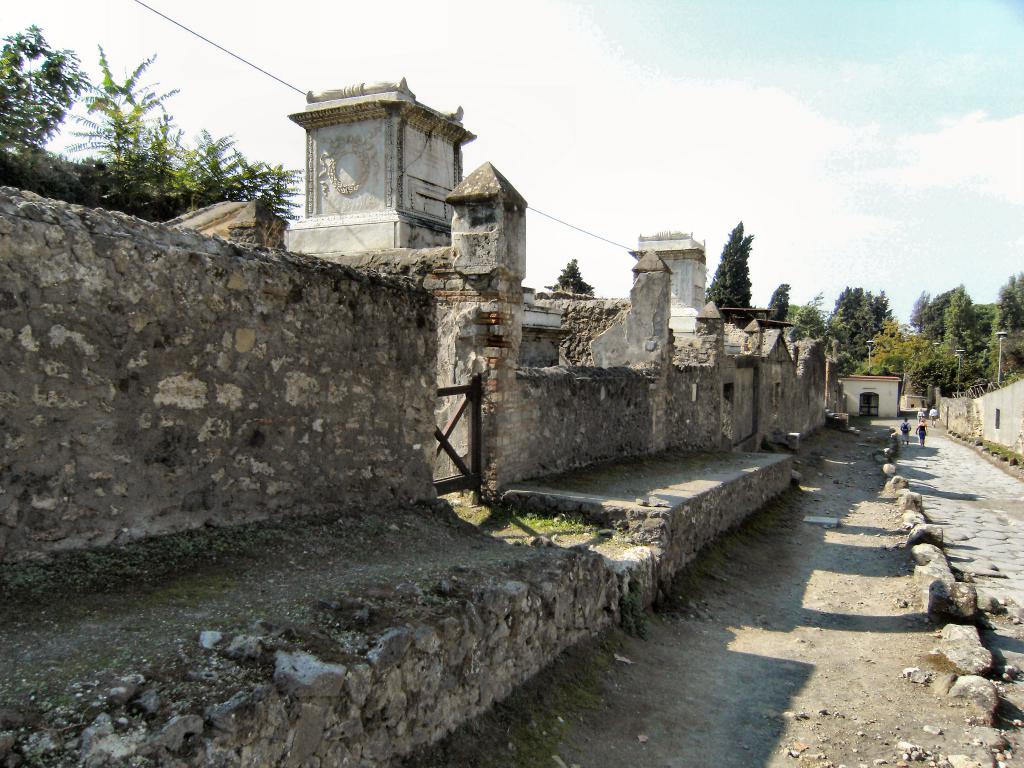
Tombs at PompeiiStreet of the Tombs · 1st century BC – 1st century ADview image
Street of the Tombs · Pompeii · 1st century BC – 1st century AD
the Street of the Tombs runs along the road outside the Herculaneum Gate at Pompeii
a range of monument types visible — from large family tombs with carved reliefs to simpler markers
shows how publicly visible Roman burial was — unlike the enclosed cemetery of the Kerameikos, these monuments faced the road
what it tells us: Romans wanted the dead to remain part of the community, seen by all who entered or left the town
view image
Street of the Tombs · Pompeii · 1st century BC – 1st century AD
Sarcophagi
elaborately carved stone coffins used by wealthy Romans — decorated with reliefs of mythological scenes and heroic battles
the choice of myth was deliberate — it gave meaning and dignity to the deceased's death
common scenes include: the Labours of Heracles (comparing the deceased to a hero), the Four Seasons (suggesting the cycle of life and renewal), and battle scenes (celebrating military virtue)
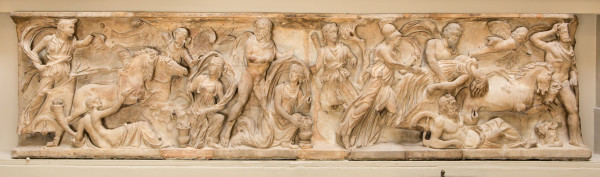
The Persephone SarcophagusCapitoline Museums, Rome · c.230–240 ADview sarcophagus
Persephone Sarcophagus · Capitoline Museums · c.230–240 AD
depicts the abduction of Persephone by Hades across the main panel, with other gods around the edges
a Roman family chose this myth for their loved one's coffin — why?
Persephone was taken to the underworld but returned — the myth implies hope of afterlife and renewal, not simply death
placing the deceased inside a box carved with Persephone's story was a statement: death is not the end
also links to Topic 1.8 — the myth of Persephone was used by both Greeks and Romans to make sense of death
view sarcophagus
Persephone Sarcophagus · Capitoline Museums, Rome · c.230–240 AD
Pliny on the ghostPliny the Younger, Letters 7.27
Pliny (c.AD 61–113) describes a house haunted by a ghost in chains — rattling through the night
a philosopher investigates; leads the magistrates to dig up the spot; finds bones tangled in chains — a body that had lain unburied
the bones are collected and buried at public expense — and the haunting stops
what it tells us: an unburied body left a dangerous, restless spirit; burial was not just a family duty but a community responsibility — the public paid for this burial
a text source — use it in answers about why proper burial mattered and Roman attitudes to the unburied dead
Roman tomb monuments and sarcophagi both do the same thing: they keep the dead visible and present, and they make a statement about who the person was. A tomb along the road says: remember this family. A sarcophagus carved with Persephone says: death is not the end. The choice of imagery was never accidental — Romans used burial monuments to manage how their dead were remembered and what those deaths meant.
Exam focus
What can we learn about Roman attitudes to death from tomb monuments?
Why might a Roman family have chosen the myth of Persephone for their loved one's sarcophagus?
What does Pliny's letter tell us about Roman beliefs about the unburied dead?
Greece & Rome
Why proper burial mattered
Both cultures agreed that burial was not optional — it was a religious necessity. An unburied body caused real consequences, both for the soul and for the living.
Greece
Rome
Without burial the soul could not cross the Styx — it wandered for 100 years
Without burial the spirit became a restless, dangerous spirit — dealt with at the Lemuria
The coin (obol) on the mouth paid Charon — no coin, no crossing
A coin also placed on the mouth — identical belief and practice
Failure to bury was deeply impious and dishonoured the family — Antigone risks her life to bury Polynices
Funeral clubs ensured no one went without proper burial — a community structure with no Greek equivalent
The unburied dead caused miasma — pollution threatening the city and its people
Pliny's haunted house: an unburied body disturbed the whole community until buried at public expense
The shared belief is striking: both cultures held that an unburied body left a soul that could not move on and a spirit that threatened the living. The coin for Charon appears in both traditions. The key difference is structural — Rome created community institutions (funeral clubs) to ensure no one went unburied, while Greece placed the duty entirely on the family.
Exam focus
Why was it important that the dead were properly buried in both Greece and Rome?
Greece & Rome
How a funeral showed wealth & status
In both cultures, burial was a public statement. The scale, quality, and display of a funeral broadcast the family's wealth and standing to the community.
Greece
Rome
Elaborate carved stelai with scenes and inscriptions — scale and quality reflected family wealth
Large tomb monuments along the roads and elaborately carved sarcophagi
More grave goods, more professional mourners, more lekythoi — all for the rich
The grander the pompa (procession) — more ancestor masks, more mourners, actors mimicking the deceased
A longer, grander prothesis with more visitors for wealthy families
Eight days in the atrium — only the wealthy could afford this; the poor had funeral clubs
Both: the quality and scale of burial reflected the family's standing — a funeral was a public performance, not just a private ritual
Greece was grand; Rome was theatrical. Greek families displayed wealth through the monument left behind — the stele that stood in the Kerameikos for generations. Roman families displayed wealth through the ceremony itself — the procession through the streets, the ancestor masks, the actors. Both used death as an opportunity to broadcast who they were.
Exam focus
How could a Greek funeral show off the wealth and social standing of the family?
How could a Roman funeral show off the wealth and social standing of the family?
Greece & Rome
Why burial took place outside the city
Both cultures required burial outside the city — but for different reasons, and with different effects on how the dead were commemorated.
Greece
Rome
Death caused miasma — keeping the dead outside protected the city and its sacred spaces from pollution
Required by Roman law (the Twelve Tables) — burial inside the pomerium (city boundary) was forbidden
The ekphora before dawn limited the spread of miasma through the city streets
Tombs lined the major roads into towns — not tucked away but placed where all passers-by would see them
Main Athenian burial ground: the Kerameikos — a dedicated cemetery outside the northwest walls
Wealthy Roman tombs were visible monuments along roads — ongoing public commemoration
The key difference is what happened once the dead were outside. Greek stelai stood in a dedicated cemetery — separate from daily life, visited on specific occasions. Roman tombs lined the roads that everyone used every day — the dead were separated from the city but remained permanently visible to the community. Exclusion and commemoration at the same time.
Exam focus
Why was it important that the dead were buried outside the town or city in both Greece and Rome?
What is the key difference in how Greece and Rome positioned their burial grounds?
Greece & Rome
Festivals of the dead — compared
Both cultures had two major festivals of the dead. All four served the same broad purpose — maintaining the relationship between the living and the dead — but they did so in very different ways.
Greece
Rome
Anthesteria — late January, three days; spirits walk among the living; linked to Dionysus; public festival
Parentalia — 13–21 February, nine days; offerings at tombs; domestic and family-focused; ends with a shared meal
Genesia — late September, one day; honours all ancestors across the family line; graves decorated with woollen ribbons; blood sacrifice
Lemuria — May, three days; to ward off evil spirits; head of household throws black beans at midnight; no Greek equivalent
The Anthesteria shows the dead were feared as well as honoured — doors smeared with pitch to keep spirits out
The Lemuria is entirely about fear — protecting the living from dangerous unburied spirits
Both cultures: neglecting the dead could bring harm to the living; festivals kept the relationship in good order; both had moments of genuine fear alongside respect
The most important comparison is the Lemuria — it has no Greek equivalent. The Greeks feared the dead during the Anthesteria (hence the pitch on the doors), but they didn't have a dedicated festival for dangerous, unburied spirits the way Rome did. The Lemuria shows a distinctly Roman anxiety about the consequences of improper burial — an anxiety also seen in the Pliny letter, and in the elaborate structures of funeral clubs to ensure no one went unburied.
Exam focus
Give one similarity and one difference between Greek and Roman festivals of the dead.
Explain how Greek and Roman festivals of the dead are similar and different. Refer to specific festivals.
Why were festivals to the dead important to both the Greeks and the Romans?
Flashcards
30 cards — click to flip, use arrows to move through