2.5 Heracles at Olympia

📚 GCSE Myth and Religion ⏱️ 45 min 🏛️ Year 10

Learning Intention

🎯
To understand how Heracles was worshipped at Olympia through the Temple of Zeus metopes

Success Criteria

By the end of this lesson, you will be able to:

1
Identify labours from visual sources
I can recognise which of the twelve labours is depicted in a metope by identifying key features, attributes, and moments
2
Analyse sculptural composition
I am able to evaluate how successfully a sculptor has depicted a labour using the three analytical criteria: use of space, recognisability, and realism
3
Explain religious significance
I can explain why the labours of Heracles were chosen for the Temple of Zeus and what messages they conveyed to athletes at Olympia
4
Apply knowledge to exam questions
I am able to structure detailed 8-mark responses that analyse metopes using specific evidence and appropriate terminology

Why the Labours at Olympia?

The Temple of Zeus at Olympia (c. 470-456 BCE) was one of the Seven Wonders of the Ancient World. Inside stood the massive gold and ivory statue of Zeus by Pheidias. But on the exterior, in the metopes above the porches, the twelve labours of Heracles were carved in stone.

Why Heracles at Olympia?
Heracles was believed to be the founder of the Olympic Games. The sculptural programme celebrated his journey from sin to redemption - a perfect message for athletes seeking glory through struggle.

The labours were arranged to tell a story of progression - from local Peloponnesian monsters to distant lands, finally reaching the supernatural realm. This geographic and spiritual journey mirrored the athlete's own path to excellence through training and competition.

Heracles established the Olympic festival and contest, the prize for victory, and the sacrifices. He conquered all the wrestling matches and won all the crowns, for no one dared to compete against him because of his exceeding prowess.
— Diodorus Siculus, Library of History 4.14.1-2

The Metopes: Click to Explore

The twelve labours were split between two porches. Click any metope to see detailed analysis of how it was depicted and why it was placed in that location.

West Porch
East Porch

Sacred Order: The arrangement wasn't random. The west porch showed labours involving divine animals and monsters, whilst the east porch displayed human opponents and distant challenges. This created a narrative arc from beast to man, from local to cosmic.

Labour Identifier

Test your ability to identify the twelve labours from visual sources alone. Look carefully at the distinctive features, attributes, and composition of each metope.

Mystery labour

Which labour is depicted in this metope?

Think about the key identifying features before revealing the answer

Key Identifying Features:
1 / 12
Labours Viewed

How to Analyse a Metope

When analysing sculptural decoration on temples, art historians and archaeologists use specific criteria to evaluate the quality and effectiveness of the work. For GCSE, you need to be able to analyse metopes using three key questions. Click each card to learn more:

1
Use of Space
How well does the sculptor fill the rectangular frame? Click to explore what makes effective composition.
Click to learn more →
2
Recognisability
Can viewers immediately identify which labour is being shown? Click to discover the key features.
Click to learn more →
3
Realism
How realistic is the sculpture? Click to understand the balance between idealisation and naturalism.
Click to learn more →

Putting It Into Practise

When answering exam questions about metopes, structure your analysis using these three criteria. Always provide specific evidence from the sculpture to support your points. For example:

Sample Exam Question
"How successfully does the sculptor depict the Labour of the Ceryneian Hind?" [8 marks]
Strong Answer Structure:
Use of Space: "The sculptor creates an elegant composition through the hind's graceful leap, with its body forming a diagonal arc that fills the frame naturally. The curved neck and extended legs occupy both upper and lower portions..."

Recognisability: "The golden antlers immediately identify this as the sacred Ceryneian Hind - the only deer in Greek mythology with this feature. The gentle pose of Heracles carrying rather than killing the creature shows..."

Realism: "The deer's anatomy is accurately rendered with realistic muscle definition and natural proportions. However, the sculptor idealises Heracles' physique to emphasise his heroic status, whilst maintaining believable balance and weight distribution..."
Exam Question
8 marks

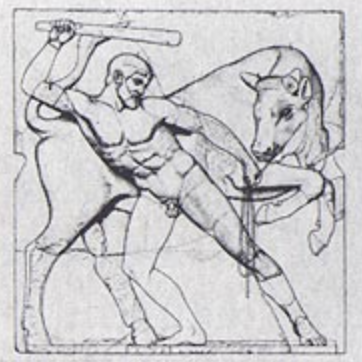
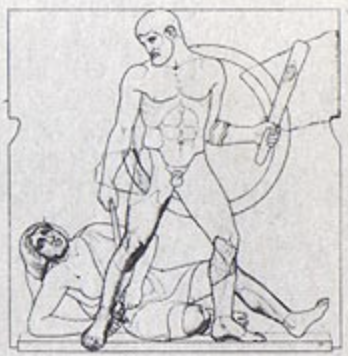
"The metopes on the Temple of Zeus at Olympia are all equally impressive."

Using Sources A and B, and your own knowledge, to what extent do you agree with this statement?

Source A
The Cretan Bull metope

Labour 7: The Cretan Bull

Source B
The Belt of Hippolyta metope

Labour 9: The Belt of Hippolyta

💡 How to Approach This Question

  • 1. Analyse both sources using the three criteria (space, recognisability, realism)
  • 2. Compare the two metopes - which is more impressive and why?
  • 3. Use your own knowledge of other metopes to support your argument
  • 4. Reach a clear judgement - to what extent do you agree?

Model Answer

I partially agree with this statement. Whilst all the metopes demonstrate skilled craftsmanship, they vary considerably in how impressively they fulfil the criteria of effective sculptural decoration.

Source A (Cretan Bull) shows highly impressive use of space. The sculptor creates a dynamic diagonal composition with Heracles wrestling the bull, his lion-skin cloak flowing behind him to fill the upper right corner. The overlapping bodies create genuine depth, and the varied heights - with Heracles leaning back whilst the bull rears up - prevent a static, flat composition. The recognisability is excellent: the bull's imposing size and fierce expression clearly identify it as a divine creature, whilst Heracles' lion skin confirms his identity. The realism is convincing, with accurate anatomy in both figures and a believable distribution of weight as Heracles braces against the bull's power.

Source B (Belt of Hippolyta) is even more impressive in its compositional ambition. The sculptor depicts multiple Amazon warriors alongside Heracles and Hippolyta, creating a chaotic battle scene that fills every portion of the frame. The overlapping figures and varied poses - some standing, others fallen - create exceptional depth and movement. The recognisability is strong through Hippolyta's distinctive belt and the presence of female warriors, though the crowded scene could potentially confuse viewers unfamiliar with the myth. The realism in the human figures is excellent, with accurate musculature and believable combat poses, though the sheer number of figures makes the composition more challenging to execute successfully.

However, not all metopes are equally impressive. The Augean Stables metope, whilst locally significant, presents a less dramatic subject - Heracles redirecting rivers rather than battling monsters. This makes for a less visually impressive composition, despite its clever celebration of intelligence over strength. Similarly, the Cerberus metope, though thematically powerful as the final labour, shows a calmer scene of Heracles leading the subdued three-headed dog, lacking the dynamic tension of the wrestling scenes in Sources A and B.

Therefore, I disagree that all metopes are equally impressive. Whilst all demonstrate technical skill, those depicting physical combat (like Sources A and B, and also the Nemean Lion and Erymanthian Boar) create more impressive compositions through their dynamic diagonals, dramatic tension, and fuller use of the awkward rectangular space. The more peaceful labours, though symbolically important, are inherently less visually impressive as sculptural compositions.
Heracles: Founder of the Olympic Games

According to myth, after completing his labours, Heracles established the Olympic Games at Olympia to honour his father Zeus. These founding myths explained why Olympia was sacred and why athletic competition was a form of religious worship.

Heracles paced out the stadium's length by placing one foot in front of the other six hundred times. He established the games every four years, and crowned the first victors with wreaths of wild olive.
— Pausanias, Description of Greece 5.7.6-8

Exit Questions

Test your understanding of Heracles at Olympia and the significance of the temple decoration.

Question 1 of 6
Loading...
Loading...